Kotor, Montenegro: The Ultimate Travel Guide to the Adriatic's Hidden Gem
Tucked between dramatic limestone mountains and the shimmering Adriatic Sea, Kotor, Montenegro is one of Europe's best-kept secrets — and it's quickly becoming one of its most talked-about destinations. Whether you're chasing medieval history, stunning scenery, or affordable luxury, Kotor delivers on every front.
What Is Kotor, Montenegro?
Kotor is a fortified coastal city on the Bay of Kotor (Boka Kotorska) in southwestern Montenegro. Its UNESCO-listed Old Town is surrounded by 4.5 km of medieval walls that snake up the cliffs of Mount Lovćen, giving it an otherworldly, fairy-tale silhouette unlike anywhere else in the Balkans.
It's often compared to Dubrovnik — but without the cruise ship crowds or the price tag.
Why Visit Kotor? Top Reasons Travelers Are Obsessed
UNESCO World Heritage Site since 1979
One of the best-preserved medieval towns in the Adriatic
Jaw-dropping mountain-meets-sea scenery
Thriving café culture, local wine, and fresh seafood
Extremely budget-friendly compared to neighboring Croatia
Easy access to Montenegro's national parks and beaches
Top Things to Do in Kotor, Montenegro
1. Walk the Ancient City Walls
The most iconic activity in Kotor. The Kotor Fortifications climb 1,350 steps (260 meters) up the mountain to the Fortress of St. John (San Giovanni). The panoramic views over the bay are worth every step. Start early to beat the heat and the crowds.
Tip: Entry costs approximately €8. Go at sunrise for golden-hour photos and cool temperatures.
2. Explore the Old Town (Stari Grad)
The Old Town is a labyrinth of marble lanes, Venetian palaces, Romanesque churches, and hidden squares. Key highlights include:
St. Tryphon's Cathedral (1166 AD) — Kotor's finest church
Clock Tower & Main Square (Trg od Oružja) — the social heart of the city
Maritime Museum of Montenegro — celebrating the city's seafaring legacy
Square of the Arms — lined with outdoor cafés
3. Take a Day Trip on the Bay of Kotor
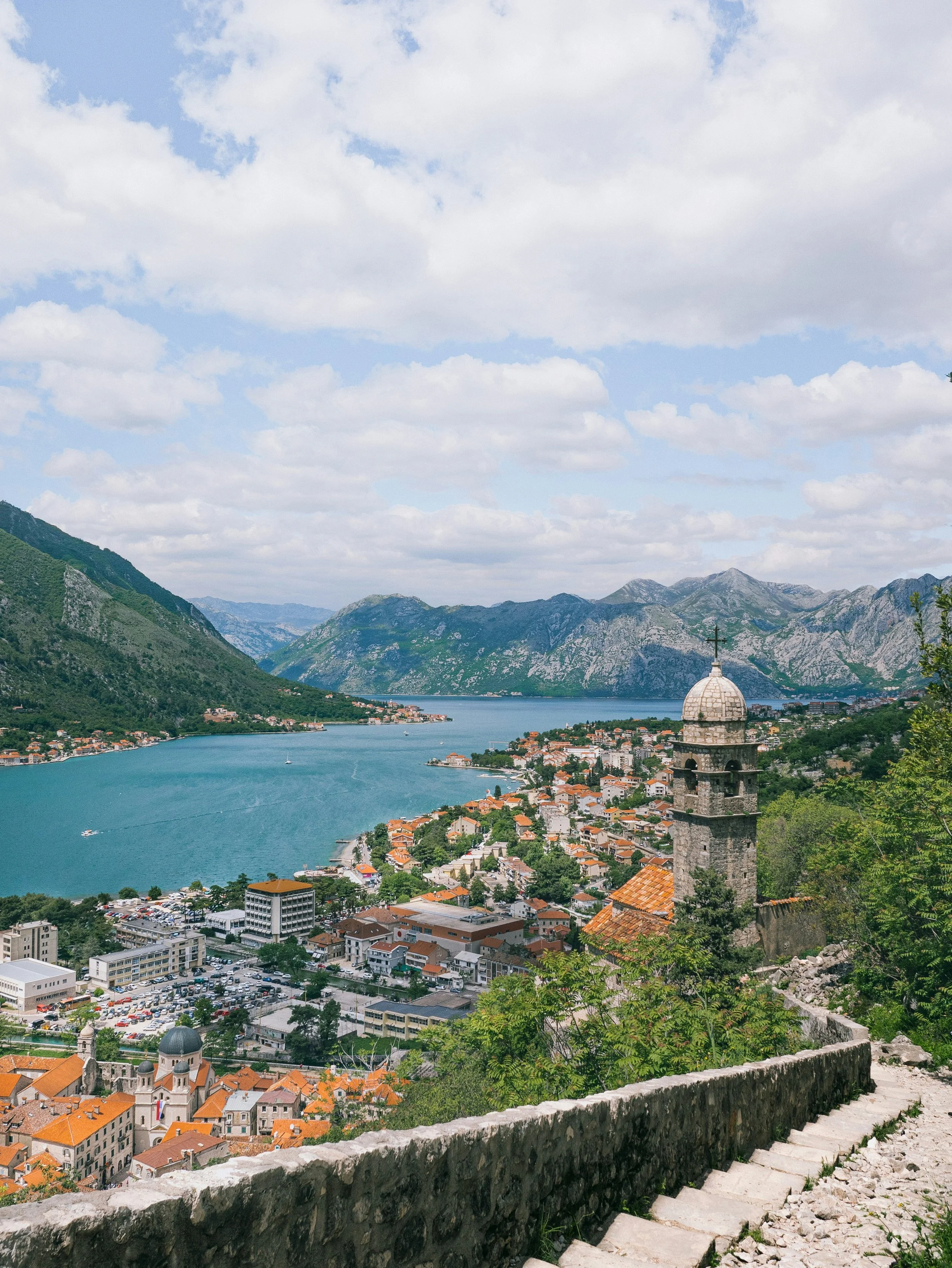
The Bay of Kotor is the southernmost fjord in Europe (technically a flooded river canyon, but equally stunning). From the Old Town waterfront, hire a boat or join a guided tour to visit:
Our Lady of the Rocks — a man-made island church with a fascinating legend
Perast — a sleepy baroque village 12 km away, arguably even more beautiful than Kotor
Blue Cave — a hidden sea cave glowing with turquoise light
4. Hike to Gornji Kotor (Ladder of Cattaro)
For serious hikers, the ancient mule trail behind the city walls leads up to the village of Gornji Kotor and beyond. This historic path predates the car road and offers solitude, wildflowers, and epic viewpoints.
5. Visit the Cats of Kotor
No, really. Kotor is famous for its cats. Descended from ancient sailors' companions, hundreds of cats roam the Old Town freely and are considered lucky guardians of the city. There's even a dedicated Cat Museum on Majorova Street.
Best Time to Visit Kotor, Montenegro
Season What to Expect April – June Warm, uncrowded, lush green hills. Best overall. July – August Peak season. Hot (35°C+), busy, prices surge. September – October Warm waters, thinner crowds, great value. November – March Quiet, cool, some businesses close. Atmospheric off-season charm.
Best time to visit Kotor: Late April through June or September through October.
How to Get to Kotor, Montenegro
By Air: The nearest airport is Tivat Airport (TIV), just 8 km away — a 15-minute taxi ride. Podgorica Airport (TGD) is 90 km away but has more international connections.
By Bus: Frequent bus connections from Dubrovnik (2.5 hrs), Podgorica (2 hrs), and Budva (30 min).
By Car: Driving along the Bay of Kotor is one of the most scenic road trips in the Balkans. Honestly, I felt like I was in a rally race at times.
By Cruise Ship: Kotor is a popular port of call. Note: cruise days (usually Tues–Sat in summer) are the busiest. Plan your Old Town visit before 10 AM.
Where to Stay in Kotor
Inside the Old Town (Best for Atmosphere): Staying inside the medieval walls is magical — expect stone-walled rooms, boutique guesthouses, and the sound of church bells. Look for properties along Stari Grad alleys.
Dobrota (Best for Peace & Views): A quiet suburb 2 km north of the walls with waterfront hotels, stunning bay views, and easy walkability.
Budva (Best for Beaches): If beach access is a priority, base yourself in Budva (30 min) and day-trip to Kotor.
Budget tip: Kotor is significantly cheaper than Dubrovnik. Expect to pay €40–€90/night for a good mid-range room outside summer peak.
What to Eat and Drink in Kotor
Montenegro's coastal cuisine is a Venetian-Slavic fusion that leans heavy on seafood and grilled meats.
Must-try dishes:
Crni rižot — black squid-ink risotto
Škampi na buzara — prawns in garlic-white wine sauce
Njeguški pršut — prosciutto from the nearby Njeguši village
Kačamak — a hearty cornmeal-and-cheese dish from the mountains
Local wine: Try Vranac, Montenegro's bold red wine made from an indigenous grape variety.
Best areas to eat: The squares inside the Old Town have tourist-priced restaurants, but duck into the side streets for local spots with half the price and twice the quality.
Kotor vs. Dubrovnik: Should You Choose?
If you've only heard of Dubrovnik, here's why Kotor deserves equal consideration:
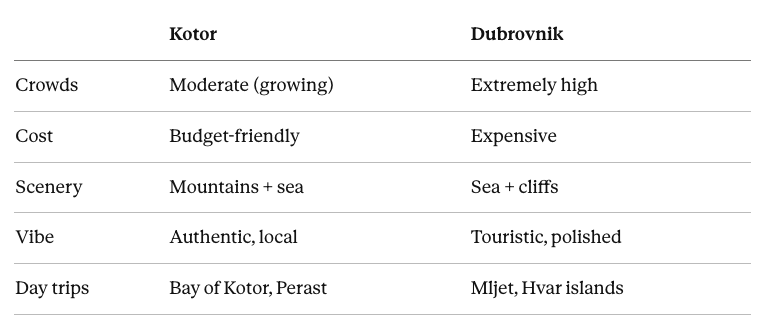
Verdict: Many travelers now do both — Dubrovnik for 2 nights, Kotor for 2–3 nights. The two cities are less than 2.5 hours apart by bus.
Practical Travel Tips for Kotor
Currency: Euro (€) — Montenegro uses the euro despite not being in the EU
Language: Montenegrin (Serbian dialect); English widely spoken in tourist areas
Visa: No visa required for EU, US, UK, and most Western passport holders
Safety: Kotor is very safe. Standard city precautions apply
Parking: Do not try to drive inside the Old Town. Use the main car park outside the walls
Dress code: Cover shoulders and knees when entering churches
Data/SIM: Pick up a local SIM at the airport or in town for cheap data
Final Thoughts: Is Kotor Worth Visiting?
Absolutely. Kotor is one of those rare destinations where the reality exceeds the photographs. The combination of a perfectly preserved medieval city, dramatic mountain scenery, a calm bay, incredible food, and wallet-friendly prices makes it one of Europe's best value travel destinations right now.
Visit before the rest of the world fully catches on.
Planning a trip to the Balkans? Let Jess get you there.